

The Edge for September 2026
We asked experts to tell us how companies can prepare for and respond to misinformation, false allegations, deepfakes and full-blow crises stemming from the internet. Here is what they said.
Don’t just cross your fingers and hope it doesn’t happen
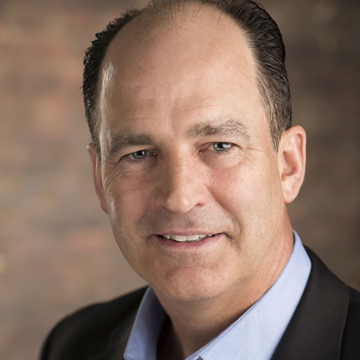 Whether your organization is big or small, I would do an offsite (meeting) to discuss what could harm the organization. Think about what’s percolating as a potential crisis this year and next year – and begin developing responses. Don’t wait. Because when something happens, you'll want to have thought about it in advance and have the architecture of a response plan. Then you can customize it based on what’s happening in the moment. Don’t just cross your fingers and hope it never happens.
— Mark Beal, Associate Professor of Professional Practice, Communication, Rutgers University
Own what is yours to own, stay true to who you are
 Your reputation is built every single day, not when a crisis happens. Be visible, be transparent, and build real relationships with the people and communities you serve. That trust matters when something goes wrong. And when it does, don’t hide from it. Get the facts, bring the right people together, and communicate quickly, clearly, and honestly. Correct misinformation, own what is yours to own, and stay true to who you are. In a crisis, credibility is your greatest asset.
— Deborah Visconi, President & CEO, Bergen New Bridge Medical Center
War games: Practice responding to hypothetical scenarios
 I come up with a hypothetical crisis and say ‘Hey guys, this is happening – What are you going to do?’ We'll bring the executives and operational staff together, and they’ll work through the scenario. Meanwhile, I'll throw in wrinkles where they have to pivot. In other words, it's important to be prepared. You're not going to be prepared for every scenario, but it’s important to build that muscle and thought process and get the right people in the room. You can't have silos to manage a crisis. It must be centralized, and someone has to be appointed to serve as the crisis leader.
— Dave Berninger, Chief Risk Officer, OceanFirst Bank
Resist the urge to immediately respond
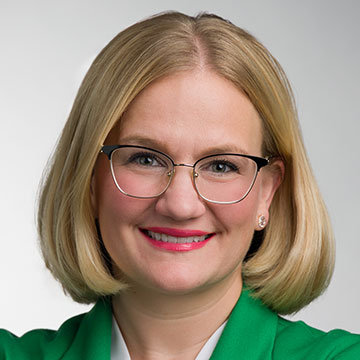 You want a robust employee handbook that contains a social media policy and news media policy that spells out who can comment publicly on behalf of the company. Resist the urge to immediately comment publicly in a crisis. Strategize, be thoughtful. Consult with your team and think through what you want to say. Resist the urge to fire off something nasty when emotions are high. You don't want to have to clean up that mess later. Also, train your employees not just on what to do when a crisis happens, but how they should proactively handle brand assets and company data in a way that limits the risk that a bad actor can get access to them. Make sure that your IP is buttoned up – get trademark registrations for your core brands.
— Abigail Remore, Member, CSG Law
Stay calm, cool and collected
 It’s important for leaders to stay calm during a potential crisis while you collect information and make decisions. You don’t want to make emotional decisions. You lose all power when your organization is making emotional decisions. You and your team should stay calm, cool, and collected. That's why I think outside counsel is helpful. We come in with a little bit of distance. We're less emotionally attached. Another point: Archive your digital assets – photos, videos – because they can be manipulated. For example, you may have a photo of your CEO doing something great for the community, and then somebody negatively manipulates it. If you have the original photo – with the meta data behind it – you can demonstrate that the picture is a fake.
— Mike Cherenson, Executive Vice President, SCG Advertising + Public Relations
Listen first
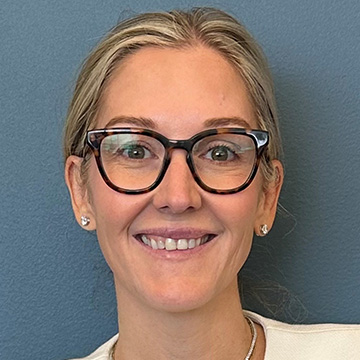 In the digital age, protecting your brand starts long before a crisis. Businesses should have a response plan, monitor online conversations, and build trust through consistent, honest communication. When misinformation, false claims, or other issues arise, respond quickly and provide clear, accurate information. It's equally important to listen, address concerns directly, and communicate openly as the situation develops.
— Carly LePore, Manager, Corporate Communications, AmeriHealth
Make trust central to your brand
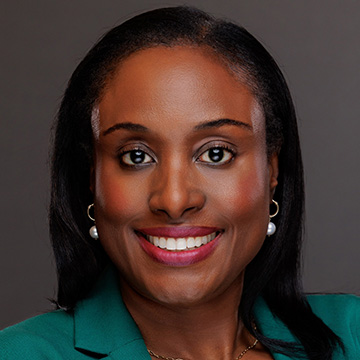 As a membership organization, trust is central to our brand. We take the protection of our members’ personal data seriously. That means regular training that prepares our staff to avoid risk and maintain best practices in security. Our social media is also centralized internally.
— Aiysha (AJ) Johnson, Executive Director, New Jersey Society of CPAs (NJCPA)
Responses for this article were edited for space and clarity.
Search the Edge Archive
NJ ChamberEdge Archive
- Protecting your brand in the digital age
- Lessons That Business Executives Wish They Learned Sooner
- Smartphone Apps that Give Execs an Edge
- The Business Books NJ Executives are Reading, and the Lessons They are Learning
- How NJ Companies Are Building Healthier Workplaces Without Losing Productivity
- How Employers Are Winning the Talent War in 2026
- Smart Networking Tips Ahead of the ReNew Jersey Business Summit
Newsmakers
Hackensack Meridian Health has received a $125 million donation from an anonymous benefactor, the largest gift ever given to a New Jersey health system. The money will support an expansion of Jersey Shore University Medical Center in Neptune City. At the donor’s request, a new pavilion will be named for John K. Lloyd, the network’s former co-CEO who died in February 2024.
Bergen New Bridge Medical Center has named Dr. William Holubek chief medical officer. Holubek, an emergency medicine physician by training, brings more than a decade of executive experience, previously serving as chief medical officer of Boca Raton Regional Hospital in Florida. He also held the role at University Hospital in Newark and served as vice president of medical affairs and CMO at Wellstar Atlanta Medical Center.
The Hackensack Meridian Center for Discovery and Innovation has received a five-year, $3.7 million federal grant to expand lung cancer screening among high-risk populations.
RWJBarnabas Health and Monmouth Medical Center have opened a new 'Food Farmacy' at Monmouth Medical's Alexander Pavilion. It's the health system’s sixth location providing patients with nutritious food and individualized nutrition counseling.
Rutgers University and RWJBarnabas Health launched the Rutgers/RWJBarnabas Health Innovation Hub, powered by Amazon Web Services. Based at the Health and Life Science Exchange in New Brunswick, the hub will bring together students, clinicians, researchers and tech experts to address health care challenges.
Three New Jersey children’s hospitals have earned top rankings in U.S. News & World Report’s 2026-27 Best Children’s Hospitals list. Hackensack Meridian Health’s Joseph M. Sanzari Children’s Hospital and K. Hovnanian Children’s Hospital, considered as a single entity, tied for No. 1 in New Jersey with The Bristol-Myers Squibb Children’s Hospital at Robert Wood Johnson University Hospital (part of RWJBarnabas Health). Atlantic Health’s Goryeb Children’s Hospital ranked No. 3 in the state and No. 6 in the NYC region.
Princeton University and NJIT have been named New Jersey’s top-ranked private and public universities in TIME magazine’s inaugural 'America’s Best Colleges 2026-2027' rankings. Princeton landed at No. 4 nationally among all 500 ranked schools; NJIT came in at No. 95 overall and No. 38 among public institutions nationwide, making it the state’s highest-ranked public university on the list.
Stockton University has completed a $24 million expansion and renovation of the Richard E. Bjork Library and Learning Commons at its Galloway campus. The project, which took two years, was completed in time for the fall 2026 semester.
Montclair State University has opened a virtual reality learning facility in partnership with Dreamscape Learn. The center is designed to expand experiential learning and prepare students for digital media careers.
United Airlines has launched a time-saving benefit for customers: the ability to order food, drinks and other travel essentials in advance through the United app and have their order waiting at the gate.
The UMC Foundation has promoted longtime staff members Gary Engelstad to senior director of giving and Rebecca Roe to senior foundation director. Engelstad, with more than 30 years of experience in nonprofit senior housing and philanthropy, will focus on donor relationships and corporate sponsorships. Roe, who joined the foundation in 2013, will oversee strategic planning, staff management and cross-functional coordination.
Jennifer D’Angelo has been named interim president of the New Jersey Innovation Institute, an NJIT subsidiary founded in 2014 to accelerate technology development and connect private enterprise with university resources. D’Angelo will assume the role Sept. 21.
Novo Nordisk said it is rebranding its name to "Novo" and updating its corporate culture. Novo also announced a broader company rebrand focused around the phrase "Lasting Health Starts Now," which promotes the idea that patients should make progress toward long-term well-being immediately rather than later.
The New Jersey Society of Certified Public Accountants (NJCPA) has launched its 17th food drive to benefit the Community FoodBank of New Jersey. Organized by the NJCPA’s Emerging Leaders Council, the food drive runs until Nov. 16.
JAG Physical Therapy has opened new clinics in North Brunswick, Old Bridge and Whiting, expanding access to rehabilitative and orthopedic services in Middlesex and Ocean counties. The additions bring JAG’s regional footprint to more than 180 locations.
Debra Rosen, a partner at Archer, has been named the 2026 recipient of the Honorable Joseph M. Nardi Jr. Distinguished Service Award from the Rutgers Law School-Camden Alumni Association. Rosen, who has spent 40 years at Archer, focuses on environmental and toxic tort litigation, compliance and due diligence. She serves on the firm’s Board of Directors and Equity and Inclusion.
Greenbaum, Rowe, Smith & Davis has formed a new practice team focused on legal services related to data center projects. Led by Barbara Koonz, the team can serve as lead counsel or as local New Jersey counsel for national and international law firms and developers.
Secaucus-based Quest Diagnostics has partnered with Apple to allow Apple's Health app users to purchase and schedule biomarker testing through the platform later this year. The service will offer a $119 laboratory panel measuring 50 biomarkers related to organ function and cardiometabolic health.